
Comparison of Forged and Cast Wheels
How much lighter are forged wheels compared to cast wheels? In the manufacturing of wheels for cars and motorcycles, forged and cast wheels are the two primary production methods. Each has its own advantages and disadvantages, particularly in terms of weight, strength, and performance. This article will explore how much lighter forged wheels are compared to cast wheels, the reasons behind it, and its implications.
I. Basic Principles of Forged and Cast Wheels
1. Forged Wheels
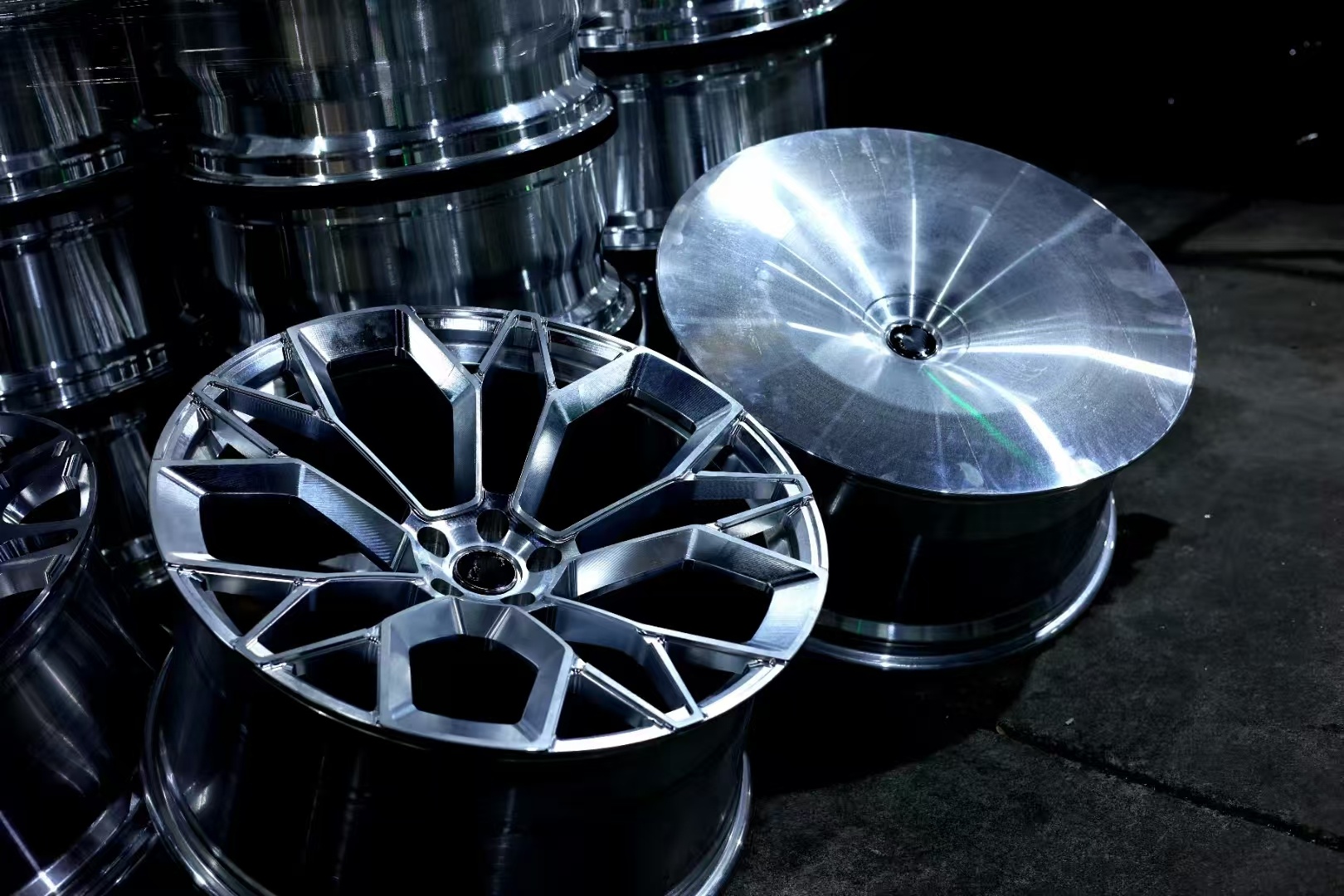
Forged wheels are produced by applying high temperature and high pressure to metal materials, shaping them in molds. This process allows the metal grains to realign, enhancing strength and toughness. Forged wheels typically use aluminum alloys or other lightweight metals, resulting in wheels that are both strong and lightweight.
2. Cast Wheels
Cast wheels are made by pouring molten metal into molds to cool and solidify. This process is relatively simple and cost-effective, but uneven cooling during casting can lead to internal defects and uneven grain structure, affecting the wheel’s strength and toughness. Cast wheels also generally use aluminum alloys, but due to manufacturing limitations, their strength and weight usually do not match those of forged wheels.
II. Advantages of Forged Wheels
1. Lighter Weight
One of the biggest advantages of forged wheels is their lighter weight. Industry data indicates that forged wheels are typically about 10% to 20% lighter than cast wheels. This weight reduction significantly improves vehicle handling, acceleration performance, and fuel efficiency.
2. Higher Strength
The alignment of metal grains during the forging process results in higher strength for forged wheels, allowing them to withstand greater loads. This means that forged wheels maintain their shape and performance better under aggressive driving or complex road conditions, reducing the risk of deformation and damage.
3. Better Heat Dissipation
Forged wheels often have more refined designs that provide better heat dissipation. This is particularly important for high-performance vehicles at high speeds, as it effectively lowers brake system temperatures, enhancing safety.
 III. Advantages of Cast Wheels
Despite the numerous benefits of forged wheels, cast wheels also have unique advantages:
1. Lower Cost
The production cost of cast wheels is relatively low due to the simplicity of the manufacturing process, making them suitable for mass production. This makes cast wheels more common in the market, appealing to budget-conscious consumers.
2. Design Flexibility
Casting allows for more complex designs, enabling a variety of shapes and styles to meet different consumer aesthetic needs. This advantage gives cast wheels a place in automotive design.
IV. Choices in Practical Applications
In practical applications, consumers’ choices between forged and cast wheels often depend on their driving needs and budget. For race cars and high-performance vehicles that prioritize handling and performance, forged wheels are undoubtedly the better choice. In contrast, cast wheels are more common for everyday commuter vehicles due to their cost-effectiveness.
V. Conclusion
Forged wheels are typically 10% to 20% lighter than cast wheels, with specific differences depending on design and materials. With their lightweight, high strength, and excellent heat dissipation, forged wheels are widely used in high-performance vehicles, while cast wheels are favored by many consumers for their affordability and design flexibility. The final choice should depend on individual needs, driving habits, and budget. By understanding the characteristics of these two types of wheels, consumers can make more informed decisions, enhancing the overall performance and driving experience of their vehicles.

 English
  Français
  Deutsch (Sie)
  Español
  Português
  Русский
  العربية
  日本語
日本語  한국어
한국어  Italiano
  Ελληνικά
  Čeština
  Dansk
Dansk  Lietuvių kalba
  Hrvatski
  Latviešu valoda
  Polski
  Svenska
  Slovenščina
  Română
  ไทย
ไทย  Slovenčina
  Српски језик
  Norsk bokmål
  Македонски јазик
  Nederlands (Formeel)
  Íslenska
  Magyar
  Suomi
Suomi  Eesti
Eesti  Български
  English (South Africa)
  English (Canada)
  English (Australia)
  English (UK)
  English (New Zealand)
  Deutsch (Schweiz, Du)
  Deutsch (Österreich)
  Español de Chile
  Español de Argentina
  Español de Colombia
  Español de Venezuela
  Español de Costa Rica
  Español de Perú
  Español de Puerto Rico
  Español de México
  Français de Belgique
  Français du Canada
  العربية المغربية
  Português do Brasil
  O‘zbekcha
  Кыргызча
  Қазақ тілі
  Українська
  Bosanski
  Cymraeg
  Aragonés
  Tiếng Việt
  اردو
اردو  ئۇيغۇرچە
  Reo Tahiti
  Татар теле
  Türkçe
  Tagalog
  తెలుగు
  தமிழ்
தமிழ்  Ślōnskŏ gŏdka
  Shqip
Shqip  سرائیکی
  සිංහල
සිංහල  Сахалыы
  Ruáinga
  Português de Angola
  Português (AO90)
  پښتو
پښتو  Occitan
  Norsk nynorsk
  Nederlands (België)
  नेपाली
  ဗမာစာ
ဗမာစာ  Bahasa Melayu
  मराठी
मराठी  Монгол
  മലയാളം
  ພາສາລາວ
  كوردی
كوردی  ಕನ್ನಡ
ಕನ್ನಡ  ភាសាខ្មែរ
  Taqbaylit
  ქართული
  Basa Jawa
  Bahasa Indonesia
  Հայերեն
  Hornjoserbšćina
  हिन्दी
  עִבְרִית
  هزاره گی
  ગુજરાતી
  Galego
  Gàidhlig
  Frysk
Frysk  Friulian
  (فارسی (افغانستان
  Dolnoserbšćina
  Cebuano
  Català
  བོད་ཡིག
  বাংলা
বাংলা  Azərbaycan dili
  گؤنئی آذربایجان
  অসমীয়া
  አማርኛ
አማርኛ  Afrikaans