
How to measure backspacing for custom wheels
A Comprehensive Guide to Measuring Wheel Backspacing
Correctly measuring wheel backspacing is a crucial step in vehicle modification. It directly impacts whether new wheels can be installed properly, as well as driving safety and handling performance. This guide will provide a complete understanding of backspacing measurement methods, its importance, and related considerations.
📏 Understanding Backspacing
Backspacing refers to the vertical distance from the wheel’s mounting surface (the flat plane that contacts the vehicle’s hub) to the inner rim lip (the edge closest to the vehicle’s interior) of the wheel. This measurement determines whether the wheel will interfere with internal components like the suspension or brake calipers after installation.
It is often mentioned alongside Offset, which measures the distance from the mounting surface to the centerline of the wheel. Both describe the position of the mounting surface, but use different reference points: Backspacing more intuitively reflects clearance from internal vehicle components, while Offset primarily affects how far the wheel sits inward or outward within the wheel well.
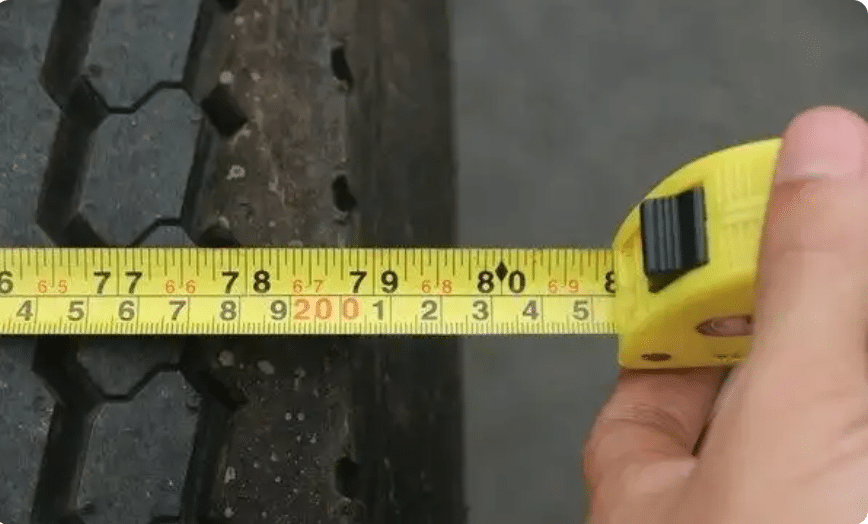
how to measure backspacing for custom wheels (1)
🔧 Preparation Before Measurement
Before starting, gather the following tools:
- A tape measure or ruler: Ideally with both inch and millimeter markings.
- A straight edge or steel ruler: Its length should exceed the wheel’s diameter.
- A calculator: For potential unit conversions later.
- Paper and pen: For recording measurements.
Safety First: It is recommended to remove the wheel from the vehicle and take the tire off. Measuring with the tire attached not only increases difficulty but also affects accuracy due to the tire’s width. Place the wheel face down (with the back side facing up) on a flat, sturdy surface.
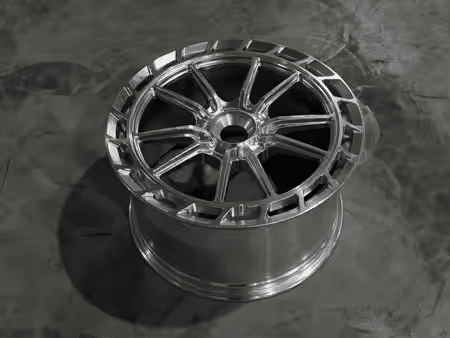
how to measure backspacing for custom wheels (4)
📐 Step-by-Step Measurement Guide
Follow these four steps to obtain accurate backspacing values.
Step 1: Position the Straight Edge
Place the straight edge or steel ruler across the wheel’s inner rim lip. Ensure the straight edge is perfectly flat, not bent, and stably positioned on the highest points of the rim lip on both sides.
Step 2: Measure the Vertical Distance
Using the tape measure, measure vertically from the bottom edge of the straight edge down to the wheel’s mounting surface. Keep the tape measure perpendicular to the ground and read the value at eye level to minimize error. This measurement is the Backspacing, typically recorded in inches.
Step 3: Understand Wheel Width
Although not directly used in the backspacing calculation, understanding the wheel’s stated width and actual overall width is very important. For example, a wheel marked “18×8.5J” has a stated width of 8.5 inches, which refers to the distance between the two bead seats. The wheel’s overall width (from the very outside of the outer rim lip to the very outside of the inner rim lip) is usually about 1 inch greater than the stated width (in this case, approximately 9.5 inches). This overall width is key for understanding the wheel’s total dimensions.
Step 4: Calculation and Conversion (Optional)
If you want to know the corresponding Offset, it can be calculated from the Backspacing using the formula:
Offset = Backspacing – (Wheel Overall Width / 2)
Note: Ensure units are consistent before calculating. Offset is usually expressed in millimeters. For example, if the Backspacing is 6 inches and the overall wheel width is 10 inches, then Offset = (6 – 10/2) = 1 inch, which is approximately 25.4 mm (positive offset).
💡 Important Tips and Common Mistakes
- Measure Multiple Times for Accuracy: Take the measurement at least twice to ensure consistent results.
- Consider Wheel Design: Some wheels have mounting surfaces that are not flat but recessed or protruding. Measure to the highest point that actually contacts the vehicle’s hub.
- Avoid Common Errors:
- Incorrect Reference Point: Always measure from the inner rim lip, not the outer one.
- Unit Confusion: Backspacing is commonly in inches, while Offset is in millimeters. Be sure to distinguish them clearly.
- Ignoring Tire Influence: The best practice is to remove the tire for measurement, as the tire’s width can interfere with accurately judging the wheel’s own data.
⚠️ Effects of Incorrect Backspacing
Choosing the wrong Backspacing value can lead to a series of problems:
- Excessive Backspacing: The wheel sits too far inward, potentially causing friction and collision with suspension components, brake calipers, or springs.
- Insufficient Backspacing: The wheel protrudes too far outward, which may cause rubbing against the fender or wheel arch during turns. Furthermore, it alters the vehicle’s scrub radius, placing extra stress on the wheel bearings and potentially leading to premature wear.
📊 Data Reference Table
The table below provides typical overall widths corresponding to different stated wheel widths, along with examples of Backspacing and Frontspace (the distance from the mounting surface to the outer rim lip) to help understand the relationship between these data points.
| Stated Wheel Width (inches) | Typical Overall Width (inches) | Example Backspacing (inches) | Corresponding Frontspace (inches) |
|---|---|---|---|
| 8 inches | 9 inches | 5.0 inches | 4.0 inches |
| 9 inches | 10 inches | 5.5 inches | 4.5 inches |
| 10 inches | 11 inches | 6.0 inches | 5.0 inches |
❓ Frequently Asked Questions
Q1: Can I measure Backspacing without removing the tire?
A: Yes, but it is more difficult and less accurate. Removing the tire is the most reliable method.
Q2: Can I install new wheels if their Backspacing is slightly different from the original factory wheels?
A: Minor differences (e.g., a fraction of an inch) can often be adjusted using wheel spacers. However, significant differences may pose risks, and consulting a professional is recommended.
Q3: Which is more important, Backspacing or Offset?
A: Both are equally important as they describe the same geometric relationship from different perspectives. When ordering wheels, ensuring both the Backspacing and Offset meet your vehicle’s requirements is key.

 English
  Français
  Deutsch (Sie)
  Español
  Português
  Русский
  العربية
  日本語
日本語  한국어
한국어  Italiano
  Ελληνικά
  Čeština
  Dansk
Dansk  Lietuvių kalba
  Hrvatski
  Latviešu valoda
  Polski
  Svenska
  Slovenščina
  Română
  ไทย
ไทย  Slovenčina
  Српски језик
  Norsk bokmål
  Македонски јазик
  Nederlands (Formeel)
  Íslenska
  Magyar
  Suomi
Suomi  Eesti
Eesti  Български
  English (South Africa)
  English (Canada)
  English (Australia)
  English (UK)
  English (New Zealand)
  Deutsch (Schweiz, Du)
  Deutsch (Österreich)
  Español de Chile
  Español de Argentina
  Español de Colombia
  Español de Venezuela
  Español de Costa Rica
  Español de Perú
  Español de Puerto Rico
  Español de México
  Français de Belgique
  Français du Canada
  العربية المغربية
  Português do Brasil
  O‘zbekcha
  Кыргызча
  Қазақ тілі
  Українська
  Bosanski
  Cymraeg
  Aragonés
  Tiếng Việt
  اردو
اردو  ئۇيغۇرچە
  Reo Tahiti
  Татар теле
  Türkçe
  Tagalog
  తెలుగు
  தமிழ்
தமிழ்  Ślōnskŏ gŏdka
  Shqip
Shqip  سرائیکی
  සිංහල
සිංහල  Сахалыы
  Ruáinga
  Português de Angola
  Português (AO90)
  پښتو
پښتو  Occitan
  Norsk nynorsk
  Nederlands (België)
  नेपाली
  ဗမာစာ
ဗမာစာ  Bahasa Melayu
  मराठी
मराठी  Монгол
  മലയാളം
  ພາສາລາວ
  كوردی
كوردی  ಕನ್ನಡ
ಕನ್ನಡ  ភាសាខ្មែរ
  Taqbaylit
  ქართული
  Basa Jawa
  Bahasa Indonesia
  Հայերեն
  Hornjoserbšćina
  हिन्दी
  עִבְרִית
  هزاره گی
  ગુજરાતી
  Galego
  Gàidhlig
  Frysk
Frysk  Friulian
  (فارسی (افغانستان
  Dolnoserbšćina
  Cebuano
  Català
  བོད་ཡིག
  বাংলা
বাংলা  Azərbaycan dili
  گؤنئی آذربایجان
  অসমীয়া
  አማርኛ
አማርኛ  Afrikaans